Baseball Bat Drop Meaning: Bat Drop Weight -3,-8,-10,-11,-13
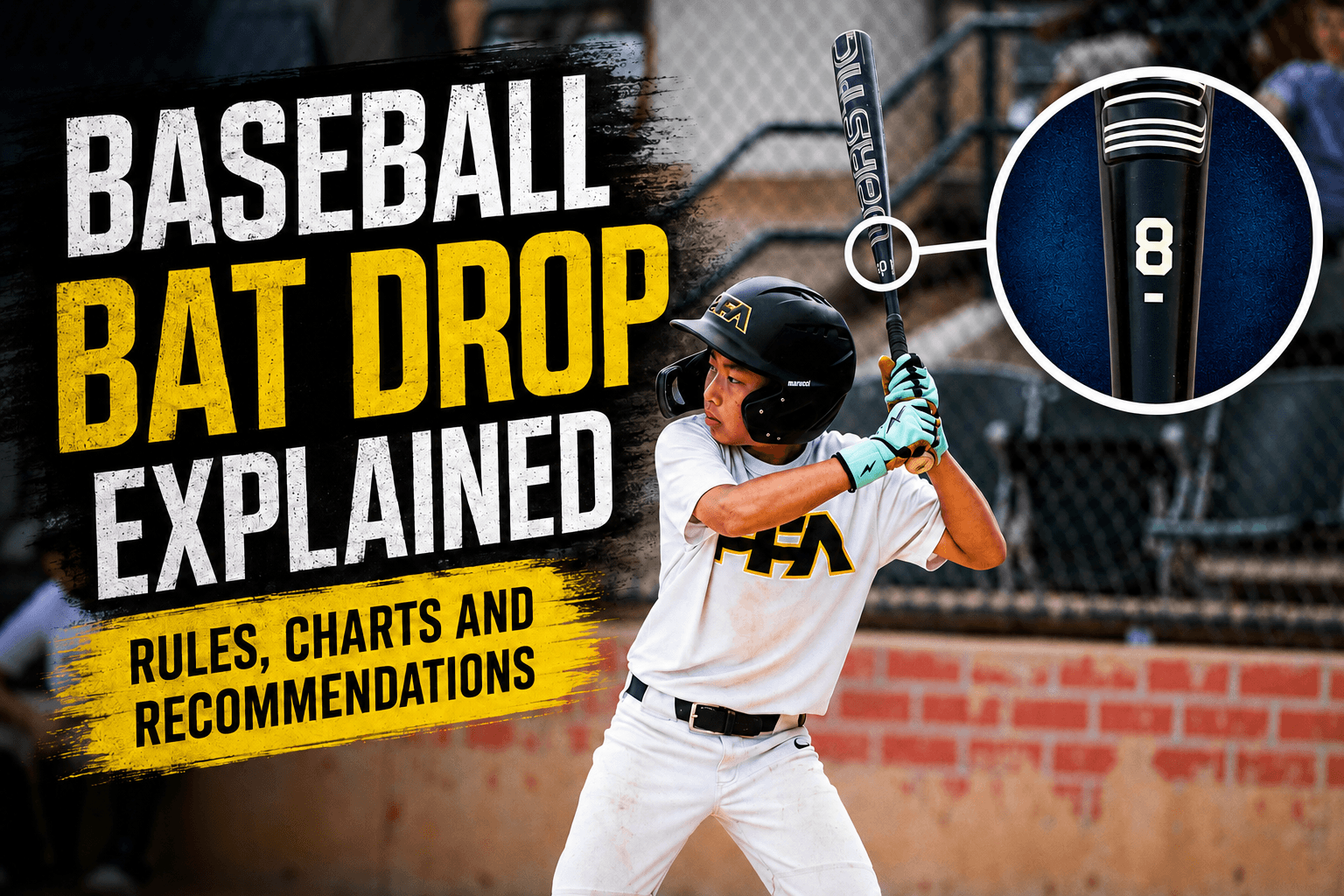
Baseball Bat Drop = Length – Weight (Length minus Weight)
It’s the difference between the length of a bat and its weight in ounces.
The bigger the bat drop, the lighter the bat.
Bat Drop Chart: Weight in Ounces by Length
| Length | Drop 10 | Drop 8 | Drop 5 | Drop 3 |
|---|---|---|---|---|
| 26 inches | 16 oz | 18 oz | — | — |
| 27 inches | 17 oz | 19 oz | — | — |
| 28 inches | 18 oz | 20 oz | 23 oz | — |
| 29 inches | 19 oz | 21 oz | 24 oz | — |
| 30 inches | 20 oz | 22 oz | 25 oz | 27 oz |
| 31 inches | 21 oz | 23 oz | 26 oz | 28 oz |
| 32 inches | 22 oz | 24 oz | 27 oz | 29 oz |
| 33 inches | — | — | — | 30 oz |
| 34 inches | — | — | — | 31 oz |
Examples to Help You Understand Baseball Bat Drop Meaning
Here are commonly asked questions:
What is a Drop 10 Bat?
That’s a bat whose weight is 10 ounces less than its length
For example, a 29 inch bat that has a drop 10 (-10) is 19 ounces.
How Many Ounces is a Drop 5 Bat?
How heavy is a Drop 5 bat depends on the length since
Weight (Ounces) = Length – Drop
|
Length |
Weight of Drop 5 Bat |
|---|---|
|
32 inches |
27 ounces |
|
31 inches |
26 ounces |
|
30 inches |
25 ounces |
What is a Drop 8 Baseball Bat?
A drop 8 bat is one whose weight is 8 ounces less than its length.
Here are examples of Drop 8 Bats and how much they weigh
|
Length |
Weight of Drop 8 Bat |
|---|---|
|
32 inches |
24 ounces |
|
31 inches |
23 ounces |
|
30 inches |
22 ounces |
|
29 inches |
21 ounces |
Guide to Baseball Bat Drops
How to Read the Drop on a Bat (-3, -5, -10)
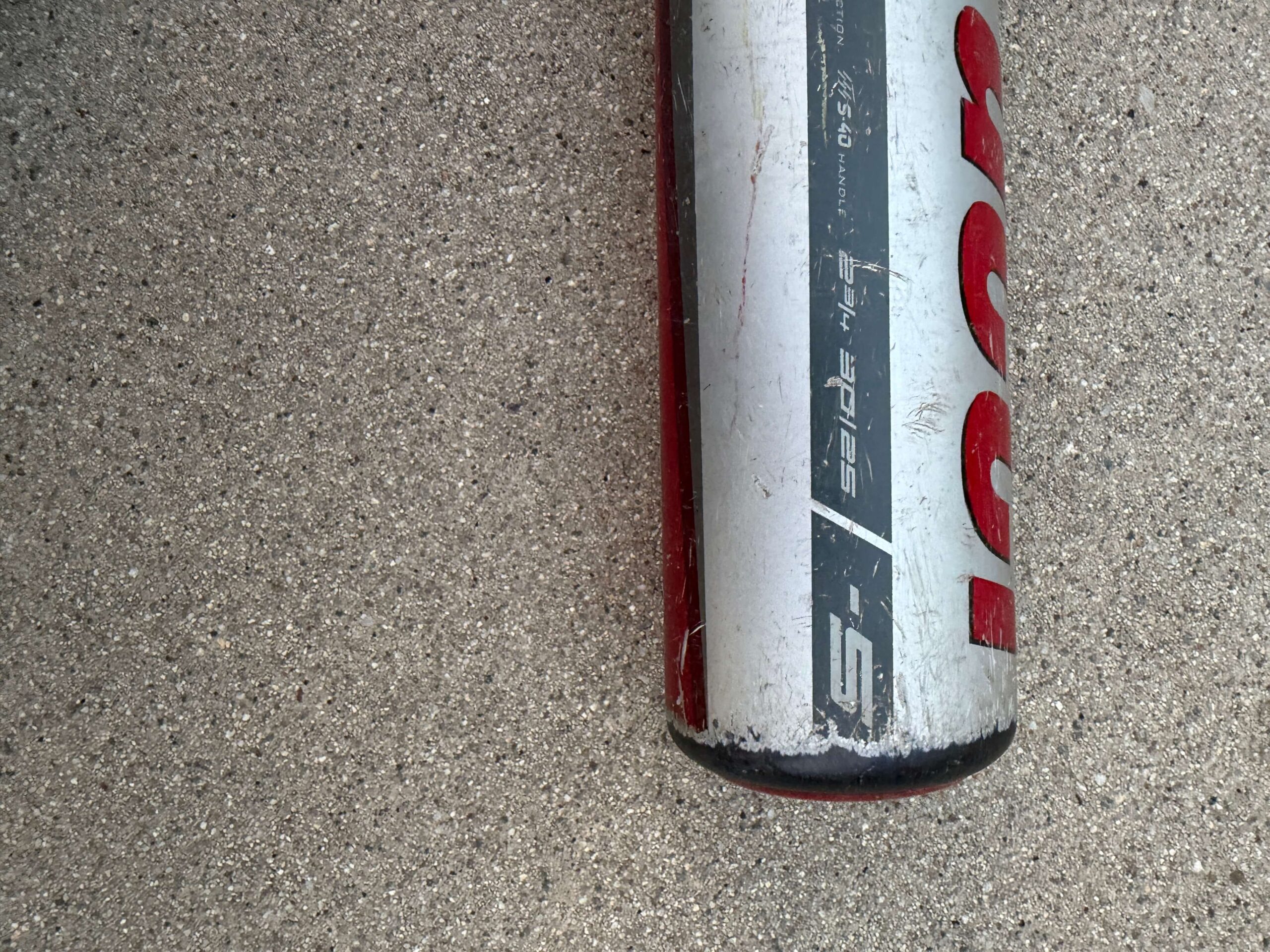
Bat drop weights are usually indicated by a minus sign “-” on the barrel of a bat and / or handle.
So a Drop 3 is -3, Drop 5 is -5, etc.
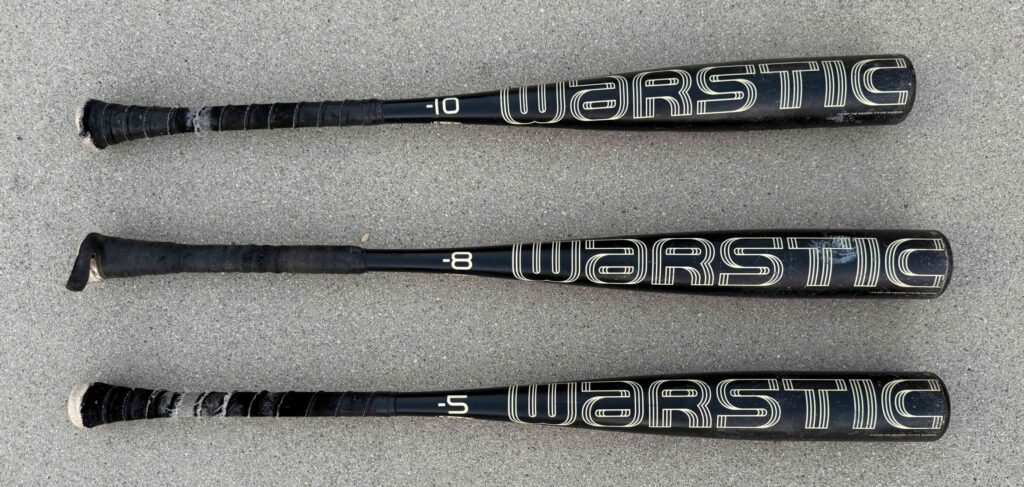
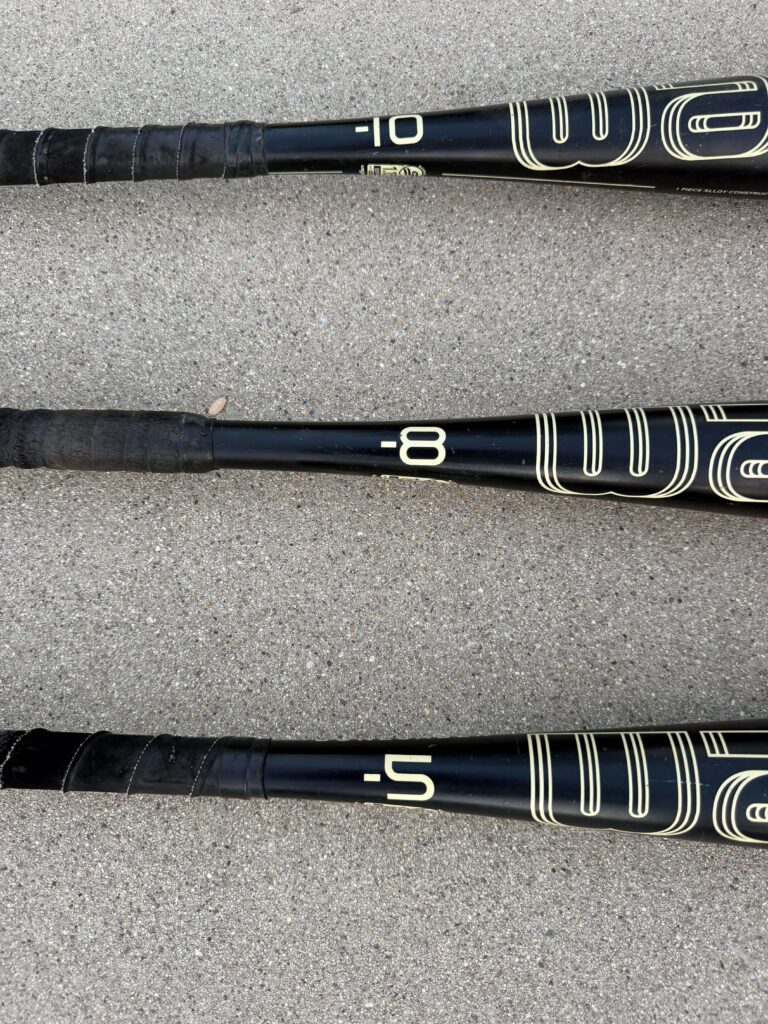
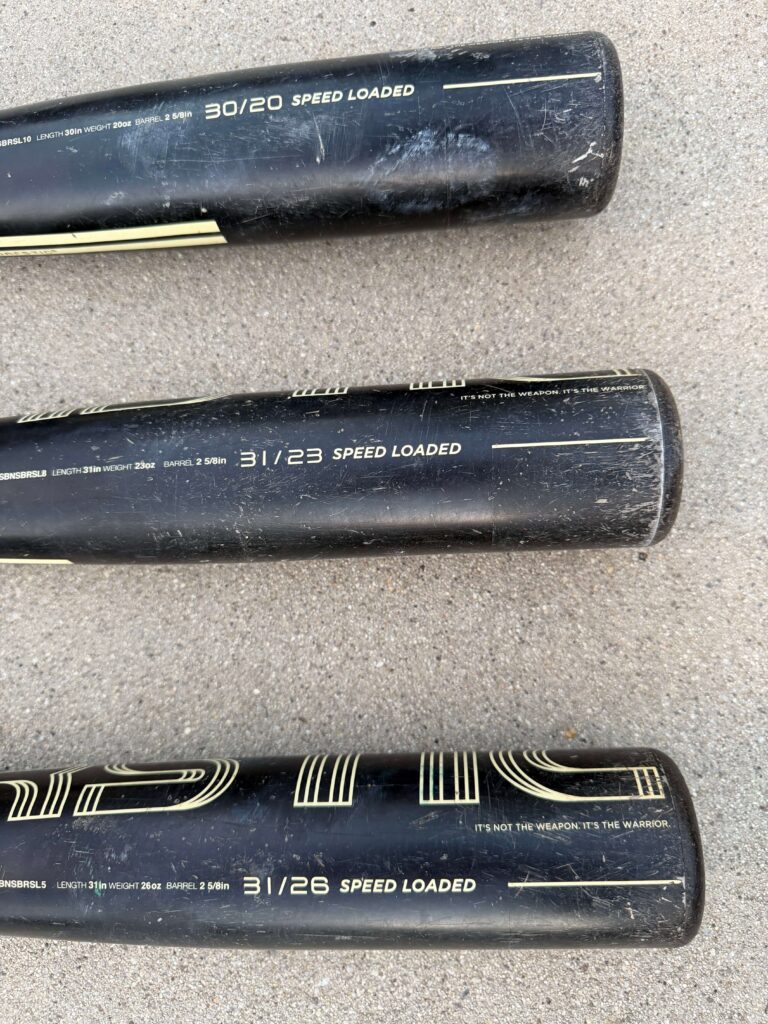
Examples of Bat Drop Weights
Here are more examples to help you understand the bat drop meaning.
| Drop | Weight of 29 inch | Weight of 30 inch bat |
| -10 | 19 ounces | 20 ounces |
| -8 | 21 ounces | 22 ounces |
| -5 | 24 ounces | 25 ounces |
Available Drops from Manufacturers
As of Oct. 2026, manufacturers only make bats in certain bat drops.
| Drops Available | Recommended Age Group |
| -13 | For T-ball only |
| -12 | For T-ball only |
| -11 | For T-ball only |
| -10 | 8U – 10U |
| -8 | 11U – 13U |
| -5 | 13U |
| -3 | 14U and older |
Drop Rules By Age Group
Different leagues and tournaments have their own unique rules but these are the typical bat drop rules for the travel ball age groups.
| Age Group | Bat Drop |
| 5U – 12U | No rule |
| 13U | At least -8 or -5 |
| 14U | -3 (some lower level tournaments allow -5) |
| *15U + (high school) | -3 |
* A new rule came out in July 2026 that allows lighter bats with drops -4, -5 and -6 for high school but these don’t rules won’t take into effect until 2028.
Tips On Choosing Right Bat Drop
One of the best things I did with my 3 boys was to prepare them for the mandatory -3 drop by age 14U.
Have a Transitional Plan
You must have a plan and slowly move them up to a heavier bat each year.
Make it a slow transition.
Here’s an example.
Recommended Bat Drop for 12 Year Old
The bat drop for 12 year olds should be -8 or -5 because the child is only 2 years away from having to use a -3 at 14U.
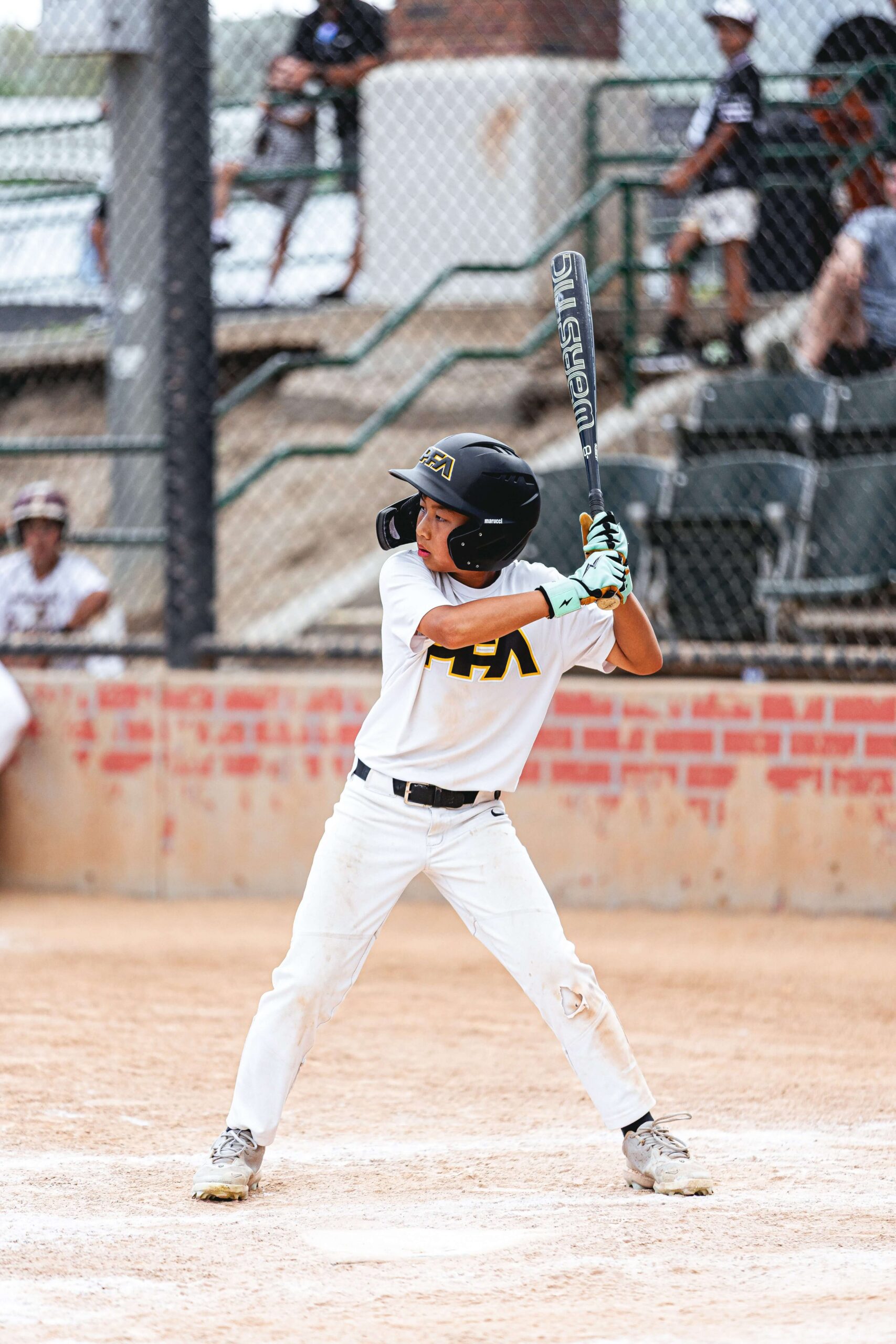
If a 12 year old is still using a -10, then the transition to -3 will be much harder and increases the chance they will struggle at 14U.
Recommended Drops by Age Group
| Age Group | Recommended Drop |
| 5U – 7U | -13, -12 or -11 |
| 8U – 10U | -10 |
| 11U | -8 |
| 12U | -8 or -5 |
| 13U | -5 |
| 14U | Rules require -3 |
Mistakes that Many Parents Make
There are 2 common mistakes that I’ve seen a parent make:
Mistake 1: Use a Bat Too Heavy
The easiest way to ruin a child’s mechanics is using a bat that’s too heavy.
This is especially true when they’re 5 – 7 years old and their muscle memory is developing.
Heavy bats make kids drop their barrels or develop upper cut swings and these mistakes become hard to fix later on.
Mistake 2: Use a Bat Too Light
The other mistake is on the opposite end when a child is clearly able to handle a heavier bat but the parent makes the kid use a lighter bat so that the kid will have greater success in games.
For example, I’ve seen 13U kids still use -8 which sets them up for struggle when they get to 14U and have to use the -3 bats.
You can refer to our recommended bat drops by age and have a plan or else your kid will struggle later on in high school.
Adjust to Your Child’s Size and Strength
If your child is smaller or not as strong it’s better to go with a lighter bat.
One of the easiest way to develop bad swing habits is using a bat too heavy.
If your child is big and stronger then you can go heavier sooner.
Use Different Bats for Training and Games
Another helpful thing I did with my boys is they always practice with a slightly heavier bat than their game bat.
For example, my oldest son practiced with a -5 when he was 11U but in games he would use a -8 because the lighter bat gave him more control against breaking balls.
Just because a child can use a heavier bat in practice doesn’t mean he can handle it in a game situation where he is seeing different types of pitches.
Kids generally can hit well in a cage or in practices with a heavier bat but will lose control in games especially when they see changeups and curveballs.
How to Choose the Right Baseball Bat
Choosing the right drop is actually the second step of the process.
There are 3 steps to choosing the right bat for your child.
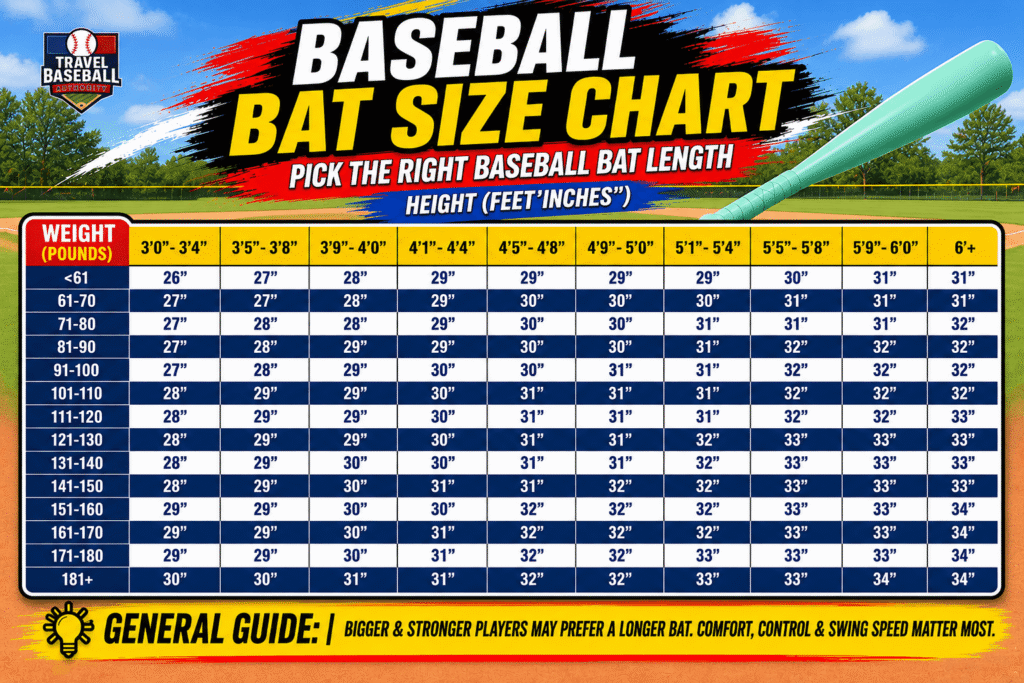
Step 1: Determine the Right Length
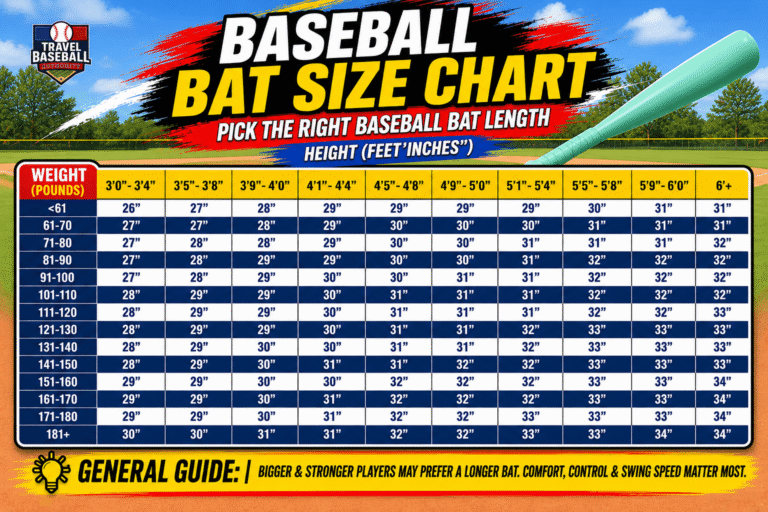
If you’re not sure the correct length, you can refer to our baseball bat size chart.
Step 2: Determine the Drop
Choose the correct drop for your child based on our recommended bat drop weight for your child.
Step 3: Choose the Bat
Once you know both the correct length and weight, now you can choose the exact bat.
Example
If your 12 year old is 5 feet tall and weighs 100 pounds then:
Step 1: He should be using a 30 inch bat
Step 2: He should be using -8 because he is 12 years old.
Step 3: His bat would be a 30 inch 22 ounce bat.
About Simon Chan
Simon Chan played Division 1 basketball and is a part time baseball coach.
He also has 10 years of experience in youth baseball and has 3 boys that play on various travel baseball teams in Southern California.
Outside of baseball, he is a business coach, speaker and Amazon best selling author.