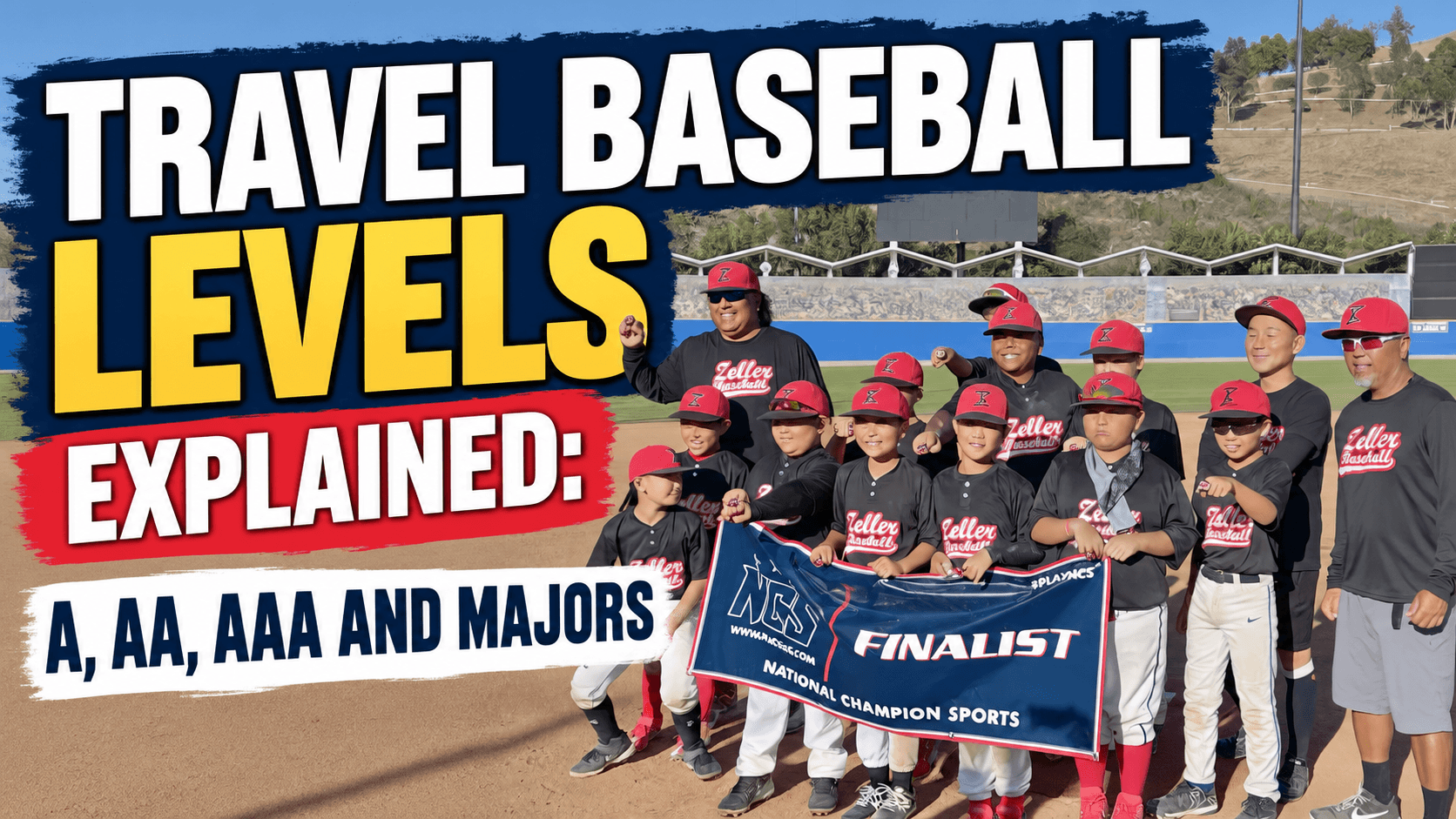
Travel Baseball Levels Explained: A, AA, AAA and Majors
It’s easy to be confused by the different travel baseball levels.
When I got started with travel ball 10 years ago, I also had no idea what the youth baseball levels A, AA, AAA and Majors meant.
Some tournaments classify teams such as D1, D2 and D3 but they’re the equivalent of AAA, AA and A and just different names.
Travel Baseball Levels Explained Outline
Differences Between Youth Baseball Levels A, AA, AAA and Majors
← Swipe left/right to compare all levels →
|
A |
AA (Div2) |
AAA (Div 3) |
Majors |
|
|---|---|---|---|---|
|
Skill Level |
Average Little League All Star |
Average Little League All Star |
The best kid in entire Little League |
Best kids in entire area covering multiple Little Leagues |
|
Focus |
Development. Great Entry level |
Mostly development. Great Entry level |
Mostly winning and some development |
90% winning and 10% development |
|
Coaching |
Dad coaches |
Dad coaches and maybe 1 paid coach |
Paid coaches. Maybe 1 – 2 assistant dad coaches |
Elite paid coaches |
|
Tournaments |
Small local tournaments |
Local. Maybe 1 regional trip a year |
Regional and state |
Regional and National |
|
Costs |
Low |
Moderate |
High |
Very high |
|
Commitment |
Low |
Low. Can skip practices and play other sports |
High. Little time to do other sports |
Super High. Extremely difficult to play other sports |
How the Levels of Travel Baseball are Determined
There is no single rule or organization that determines travel baseball classifications.
The level of a travel baseball team is determined by the coach or program director when they register to play in a tournament.
When a team first applies at the beginning of the season to play in tournaments (such as NCS, USSSA, Perfect Game, or Triple Crown), they have to submit paperwork like waivers and insurance.
During this initial registration process, the coach also selects the team’s classification level.
Wrong Travel Baseball Classifications
Some teams under-classify themselves to play against weaker opponents and get a better record.
This is self-defeating because even though the team is winning a lot of games, the players are not getting better.
Plus, it gets boring if they constantly blow out other teams.
The opposite is also true.
If a team over-classifies itself, the kids will constantly get beaten by teams that are way better than them.
Most Teams Have Multiple Travel Ball Levels
Most teams have multiple levels of travel baseball.
For example, there may be
- A Team : Majors
- B Team: AAA
- C Team: AA
Common examples are teams like Canes and ZT, which may have an elite national team that is Majors, and then they may also have many starter teams that are AA level.
Skill Level
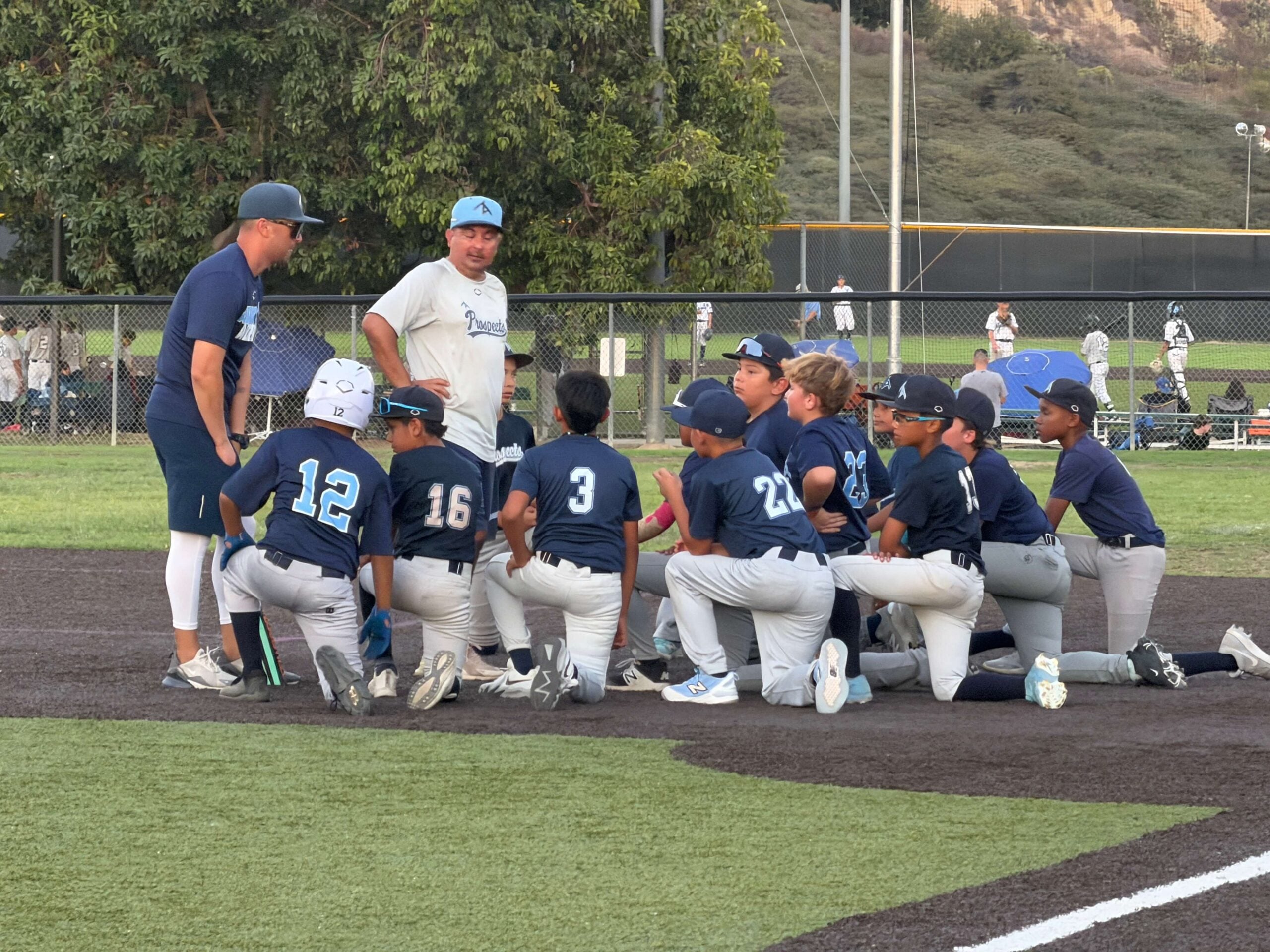
The biggest difference in the travel baseball levels is the skill level of the kids.
I used Little League (or Pony League) as a reference point.
A
The A level usually have kids who are just starting to play baseball.
A Level isn’t that common
NOTE: If your child isn’t even at that Little League All Star level yet then they shouldn’t play travel baseball. Invest the time in lessons and workouts instead until they get better.
AA
The AA level consists of the average Little League or Pony League All Star.
AA level consists usually of kids that are just starting to play travel baseball and a good entry point.
Two of my older boys first joined local AA level teams and they were great experiences.
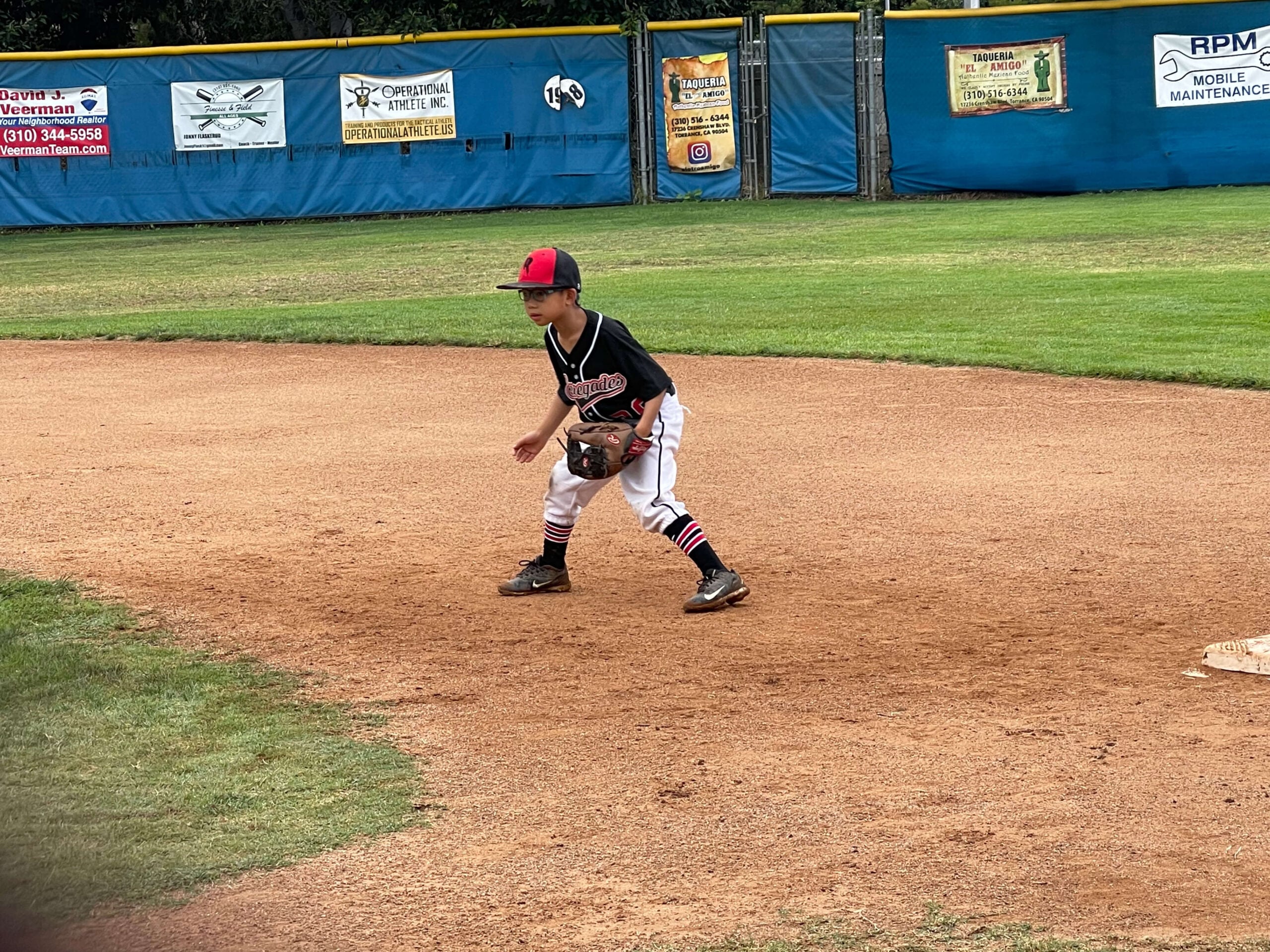
AAA
These teams consist of usually the best kid in entire Little League.
Majors

The Majors level contains the best players from out multiple Little Leagues or the best kids from entire region.
My second son was on an elite 12U Majors team called “PFA Regional 2032” that was a regional team that consisted of top kids from different parts of California, Nevada and Arizona.
Pitching
My friend once asked me, “What’s the easiest way to tell whether a team was in AAA or majors?”
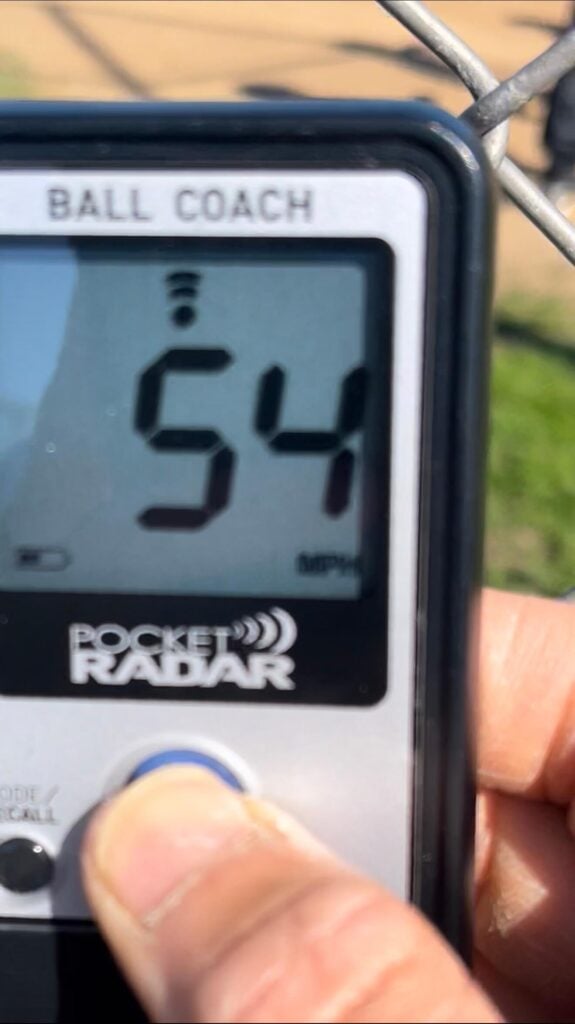
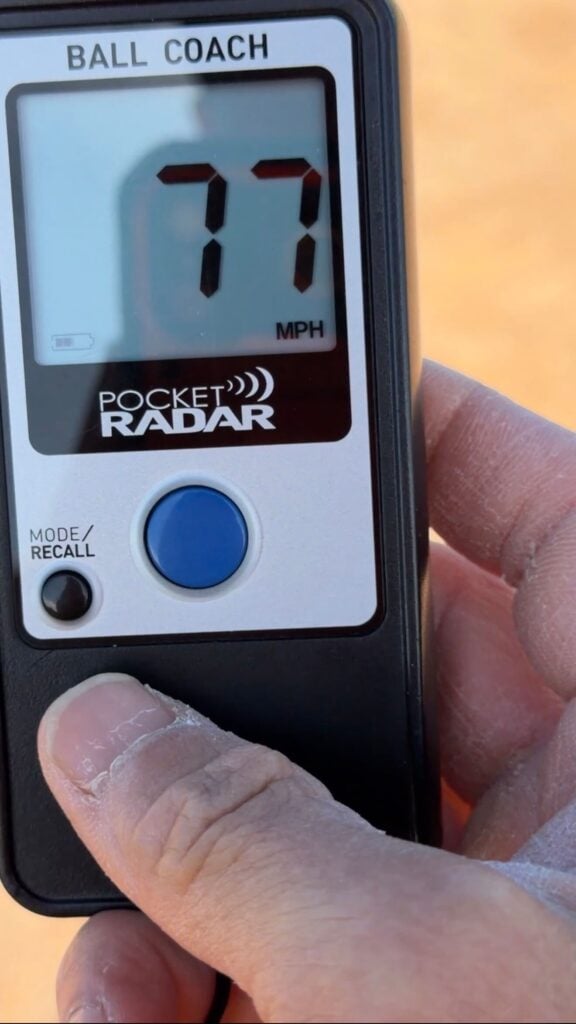
I think the easiest way to differentiate between these travel classifications is by looking at pitching velocity.
12U Pitching Example
I use the pitching velocity that you see at the end of the 12U season as an example
|
Level |
Pitching Velocity for end of 12U |
|---|---|
|
A |
Below 50 mph |
|
AA |
50 mph to 55mph |
|
AAA |
55 mph to 68 mph |
|
Majors |
68 mph – 80 mph |
Quality of Defense
If you are watching a team practice and wondering, “what level do they play at,” looking at the overall quality of their defense is the fastest way to find out.
Here are some examples.
|
Level |
Fielding a Grounder |
Cut Offs |
|---|---|---|
|
A |
Every grounder is an adventure! |
May not know what to do |
|
AA |
Little better than Little League |
Players often in wrong position |
|
AAA |
Occasional error but almost all plays are made |
Players in right position but throws may be off |
|
Majors |
Almost perfect. Errors are rare |
Players are in correct spots and perfect throws |
Focus on Winning or Development?
There is a myth that there is no development in travel baseball and that’s totally not true.
Your child will get development from the practices and games but there are differences in types of development for the different levels.
Development During Games
This is the biggest difference between A and AA level versus Majors.
All teams want to win but the games are managed differently.
Here are 2 big differences.
How Many Kids Get to Hit
The lower end teams bat all the kids so even a bad hitter gets to hit at the bottom of the lineup.
The AAA and Majors teams usually bat everyone during pool play but may bat only 9 or 10 kids during the Bracket play and the other kids have to sit on the bench as Subs.
Positions
A and AA teams usually allow different kids play different positions even if it may hurt them in the game.
My oldest son once made 3 errors at shortstop but the coach allowed him to continue playing that position and that helped his development long term.
If he was on a AAA or Majors team he would have been yanked immediately and would take a lot of practice to earn the trust to play shortstop again.
AAA and Majors teams only play the best players at the important positions and don’t rotate as much.
An example is when my oldest son was on a top 9U team (that eventually won the USSSA Int’l World Series) he never played an inning at shortstop for the entire year!
Travel Team Coaching
There are also different levels of coaching.
The lower levels have more dad coaches while parents of the AAA and Majors don’t tolerate dad coaching and only use hired coaches.
Tournaments
Lower levels such as A and AA usually stick to local tournaments within 20 minute driving time.
AAA teams travel regionally (up to 300 miles) while Majors teams travel nationally.
Costs
The entry level teams are generally the most affordable and around $100 – $200 a month.
The higher you go up the travel baseball costs increase dramatically and can get up to $950 – $1,000 a month.
These higher costs are attributed to:
Coaches
To prevent Daddy Ball (Dad Coach who gives unfair treatment to a son who is on the team), top travel baseball teams usually hire paid coaches.
These coaches or “hired guns” all have past baseball playing or coaching experience.
Field and Facility Rentals
Most of the lower level A and AA teams are usually the local rec. team’s travel team so they get to use the Little League or Pony League field for free.
This is a huge advantage because field rental can be a few hundred to thousands of dollars a month and this helps keep the costs low.
Tournament Fees
The local tournaments are usually way cheaper especially considering many of them use the local Pony or Little League field.
The higher levels of competition require more experienced umpires, facilities management etc. and this makes the tournament fees way higher.

Travel Costs
Travel baseball costs are much higher for elite teams because they travel further to play and you need to pay for gas, food and lodging.
You also may have to take a day off from work or from your business and this may cost you money as well.
Commitment
A and AA teams understand your child has other interests while the time commitment is much higher for the AAA and Majors.
It will be difficult for your child to play other sports or have other activities during the travel baseball season with a AAA or Majors team.
On the other hand an A and AA team may even change their schedule to allow kids to participate in other activities.
An example is one of the AA teams from my area always play their tournament games late on Saturday (after 4pm) so that the games don’t conflict with weekend morning soccer and football games.
How to Choose The Best Travel Baseball Team Level
The best travel baseball level for your child depends on what the goals are and how old.
It depends on many factors such as:
1) Interest and Passion
If your child is really passionate about baseball and they have lower tolerance to kids who are less committed, then being on a top team may be a better fit.
If he has other interests aside from baseball then it’s better to join a lower level team instead.
2) Skill Level
If your child is one of the best in the area then it may be better for him to practice with other top kids and tryout for a Majors team.
3) Learning New Positions
If the goal is to learn a new position it may be better to join a lower level team that will be patient with him as he makes mistakes and learns.
Being The Worst Player on a Top Team
I always have the philosophy it’s best to be the worst player on a good team since your child will learn and grow the most.
But if you do that you’ll have to make sure you teach him delayed gratification and the process.
About Simon Chan
Simon Chan played Division 1 basketball and is a part time baseball coach.
He also has 10 years of experience in youth baseball and has 3 boys that play on various travel baseball teams in Southern California.
Outside of baseball, he is a business coach, speaker and Amazon best selling author.