
Baseball Mental Toughness: Boost Your Child’s Confidence
Baseball mental toughness is so important because baseball is such a hard game and kids can get discouraged easily.
If you don’t teach them the right baseball mindset they will lose interest in the game eventually and quit.
I’m going to share a few things that I do with my 3 boys and has helped my oldest son become one of the top ranked high school players in America.
3 Tips to Develop Baseball Mental Toughness
Here are 3 simple tips to help your child develop the right baseball mindset and increase confidence.
1) Visualize Success to Increase Baseball Confidence
All top performers in every field know that what you visualize plays a big part in the outcome you get.
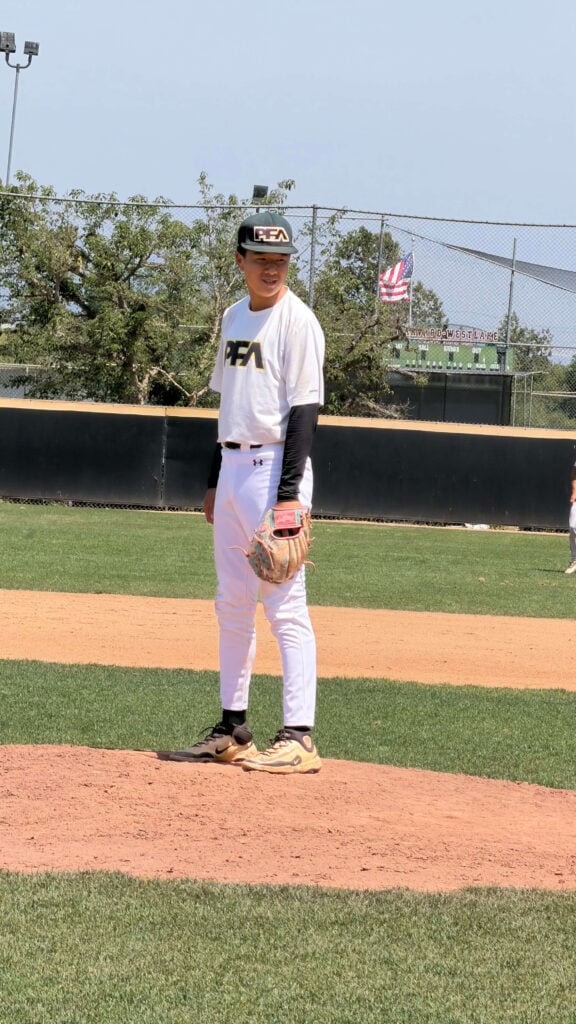
An important factor that increases baseball confidence is what your child visualizes.
If they visualize a negative outcome (such as a strikeout, making an error, walking the batter), then that will make him perform poorly.
They eventually always get the negative outcome they visualized!
Visualizing positive does not guarantee a positive result, but visualizing negative definitely guarantees a negative result.
They will have no chance!
Teach your child to visualize and see a positive result instead of a negative outcome.
2) Reward Activity and Not Result
Everyone loves praise and rewards but if you only reward your child if he gets a positive result such as a hit then they will get discouraged easily since baseball is a game of failure!
It’s so hard to get a positive result in baseball!
To keep your child motivated you must reward activity instead of result!
An activity can mean working hard and hitting 30 balls of a tee or playing hard in a game.
The reason you reward activity is because as long as they continue to work hard, they will eventually get better.
But if you reward just results, they will quit soon once they don’t get the result.
You have to emotionally detach them from the results and winning.
Here are some examples of how I do this
1) Reward Your Child if They Played Hard
Praise and give them a treat if they played hard and hustled down to first base on every at bat.
This way your child will know that working hard is more important than getting a home run and also keeps the game fun.
For example, when they were young I would take my boys to a nice dinner and treat them with ice cream if they played hard even if they went hitless.
They learned early on that the effort is more important than the result.
And as long as they kept working hard, they will eventually get the result.
2) Reward Your Child if They Swing Hard

The biggest obstacle to hitting for young travel baseball players is being afraid to swing because they don’t want to strike out.
When the pitch is thrown they’re tentative and overthink and before you know it, they swing too late or swing weakly and get out.
The way to overcome this fear is to reward them for swinging hard.
As long as they were aggressive and swung hard I would reward them with ice cream even if they struck out.
I knew that as long as they kept on swinging they would eventually learn what to swing at and also make good contact.
Here’s another good rule for young players.
Strikeouts Are Better Than Walks!
We all know that walks are better than striking out if you want to win but this is a trick to help kids win at the mental game of baseball.
I never scolded them for swinging and striking out.
The only thing I would scold them for was not swinging and trying to walk.
In our household, unless the pitches are in the dirt or way over your head walks are no good!
We do NOT take pitches!
I rather them be free swingers than take pitches and try to walk.
Note: If you want to play at a high level in high school and beyond note that no one remembers you if you walk. They only remember the ones who hit the ball hard and you won’t be able to do that if your child develops a habit to take pitches.
3) Reward Them When They Get Hit
One of the biggest fears for young players is getting hit by the baseball and this fear causes them to step out of the box and makes them bad hitters.
My oldest son was really scared at 6 years old but eventually he overcame that fear by my reward system.
The activity we wanted to reward was staying in the box and not stepping out.
I told him that he would get $50 and also get ice cream immediately after the game for every time he got hit.
He was still scared but after he made $50 the first time and able to buy the Lego set he wanted it made the pain more bearable.
After the first time he got his $50 he was more brave the next game and his habits of stepping out eventually went away because he was willing to take the pain for the reward.
And after a few more games he realized that he couldn’t get hit and get his $50 even when he wanted to!
And before you know it, he overcame that fear.
3) Relax by Thinking of Something Fun or Funny
In baseball you have to relax and just “let it flow” because it’s impossible to hit a ball if you’re tense and nervous.
You simply have no time to react.
Your child will naturally get nervous and tense and you can help him by making him think of something fun or funny.
For example, my son had a favorite stuff animal and I would yell out his secret name every time when he was about to hit and this would make him smile and loosen the tension.
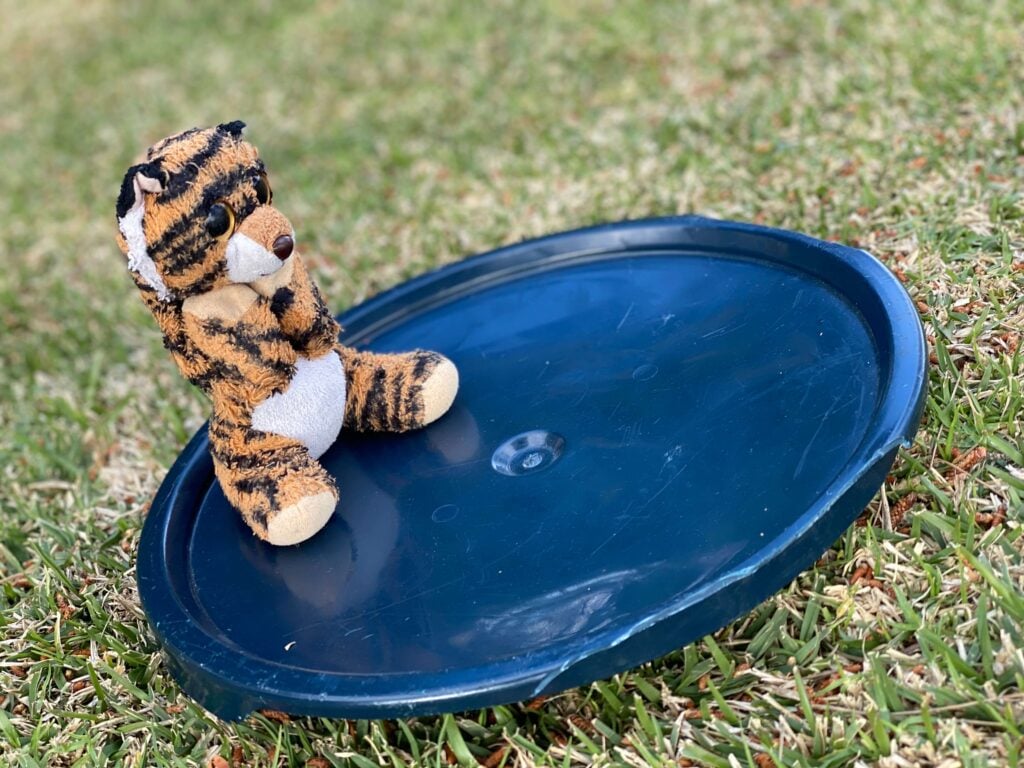
As he got older I didn’t need to yell it out but he would think of his stuffed animal by himself to relax himself.
Common Baseball Mindset Mistakes That Many Parents Make
Here are some common mistakes that I see travel baseball parents make.
1) Rewarding Results Instead of Effort Decreases Confidence
After a game, I once saw a dad express his disappointment to his 9 year-old son that his deep fly ball was caught and not a homer.
After he said it, I saw his son get discouraged as well especially, he has been hitting poorly for the past few games.
To that poor kid, nothing seemed to work and that type of reaction from his dad are the ones that discourage kids from wanting to keep playing baseball.
The parent should have rewarded his son for swinging hard and hitting the ball far, and that would encourage the son to keep practicing and swinging hard and eventually he will get better.
2) Giving Advice During a Live At-Bat
I definitely have been guilty of this and learned the hard way.
Baseball is a game of reaction, and there’s nothing you can say during a live at-bat that’ll make your son do something different that he has not done before.
Whatever happens at the at-bat is a reflection of how he practices.
Give the feedback during practice, but not during a live situation.
In the game he needs to be relaxed at this time, and any feedback that you give him actually makes him tense up, overthink, and do poorly.
I do admit, though, as a dad and a coach, this is very difficult to do.
3) Telling a Child to Avoid a Negative Outcome
I hear parents say things like “don’t miss,” “don’t strike out,” or “don’t walk them.”
When you say these negative outcomes, that is what your child visualizes, and usually that’s what you’re going to get.
If you are going to say anything to your child, make it positive and not negative.
So instead of saying “don’t miss,” you can say “hit it hard.”
Mental Training for Baseball: Recommended Reading
Here are two good books that every parent should read.
Heads Up Baseball is a famous book and Aaron Judge once said that this book changed his life.
They also have a version that kids can read and I had all 3 of my boys read it.


Free Baseball Mental Toughness Assessment
As kids advance through the travel baseball age groups and want to play at a college level, developing strong baseball mindset is what will get you to play in college and beyond.
It is the separator between the good and great.
A business associate that I’ve known for many years, Ivan Sisco has a great baseball mental skills coach and they have a Free Mental Performance Assessment your child can take

Baseball mindset is so important so I highly recommend you take the Free Assessment.
If there is only thing you want to take away from this guide is,
Reward activity and not result and get your child to relax and have fun!
About Simon Chan
Simon Chan played Division 1 basketball and is a part time baseball coach.
He also has 10 years of experience in youth baseball and has 3 boys that play on various travel baseball teams in Southern California.
Outside of baseball, he is a business coach, speaker and Amazon best selling author.